
New store Sheba brings Yemeni and other Arab goods to the Tenderloin
The business is a blend of cultures, just like the family behind it.
The business is a blend of cultures, just like the family behind it.

A mutual love of literature sparked romance between David García and María Fernanda Ramírez. Now they’ve opened Niebla bookstore on Golden Gate Avenue.
Officials are looking for feedback as they redo their contracts with services providers.
The business is a blend of cultures, just like the family behind it.

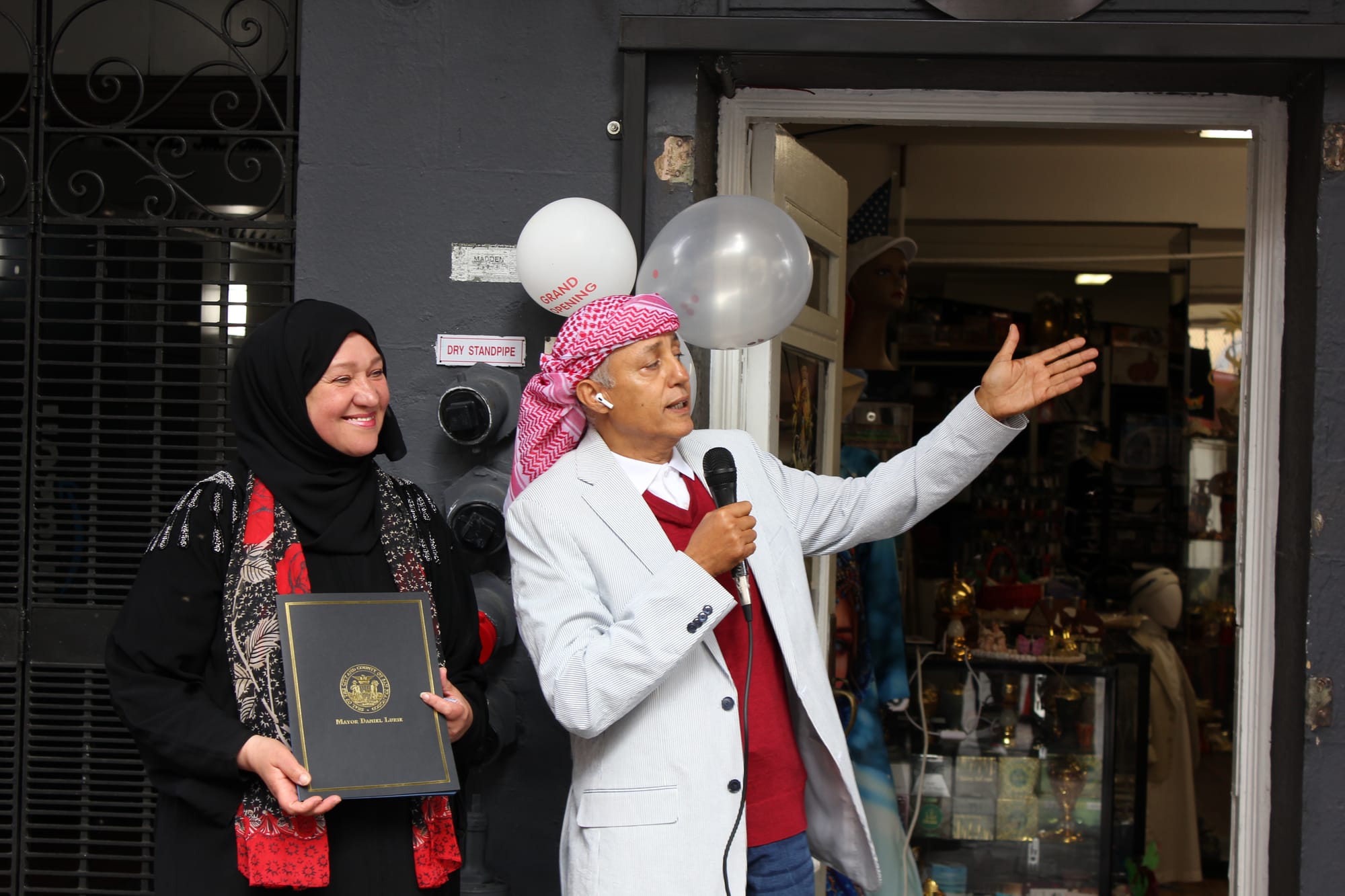
Sheba isn’t just a store; it’s a story. That’s how Jalal Alabsi describes the new business that he and his wife, Tatiana Alabsi, opened Friday morning. Sheba Clothing & Traditional Store specializes in goods from Arab and Muslim cultures — modest fashion like abayas and jalabiyas as well as perfumes, henna, décor items, and halal sweets.
The story of Sheba begins like this:
Tatiana was born and raised in Russia. But when she married Jalal, she moved to his native Yemen. There, she discovered the beauty and richness of Yemeni traditions, like its clothing and food, and found people to be exceptionally open and welcoming.
“These people teach me it’s not important what is your religion, what is your culture. It’s important that everyone respect each other,” she said.
The couple stayed in Yemen for 15 years. When they moved to San Francisco, they brought their culture and values with them. Both the Alabsis found jobs that let them devote their time and energy to local causes. Jalal is a leader in the Food Justice League, working to lower barriers to nutrition access for low-income Tenderloin residents. Tatiana is the program manager for Safe Passage, a Tenderloin Community Benefit District initiative guiding groups of kids to and from school through the rougher parts of the neighborhood.
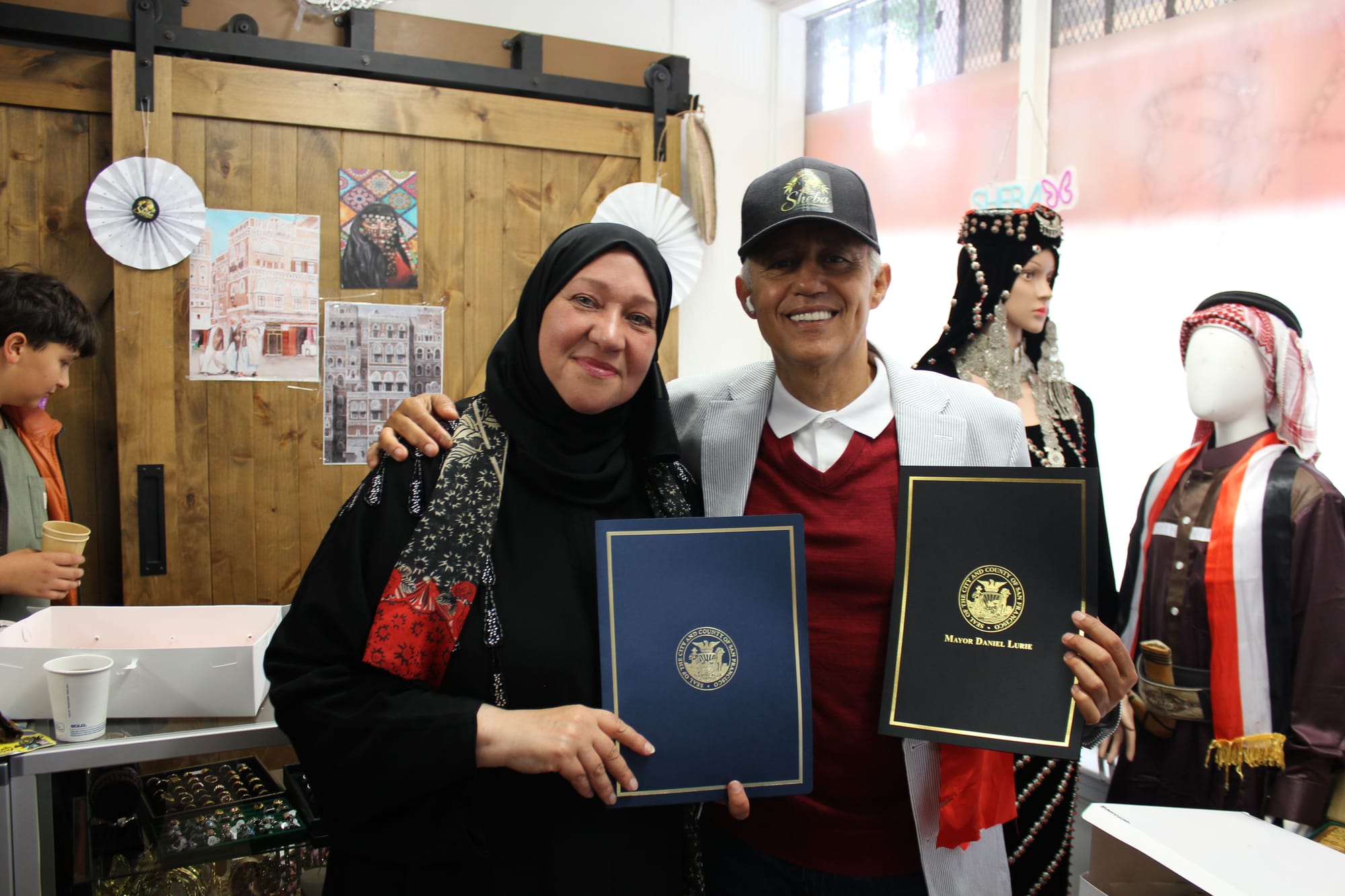
“I’ve seen you do the work in this community for almost a decade now,” said Chris Corgas, with the city’s Office of Economic and Workforce Development, at Sheba’s ribbon-cutting ceremony. It was the second grand opening of a Tenderloin business in as many days.
Bilal Mahmood, who represents the Tenderloin on the Board of Supervisors, called the Alabsis “the power couple of the Tenderloin.”
“This is a testament to the community coming together,” he said of Sheba’s opening.
And indeed, it took many city agencies, a cadre of small business owners, and lots of siblings and in-laws (Jalal has a big family) to bring Sheba to its storefront at 318 Turk St. They helped the Alabsis navigate the process of opening a business and applying for grants to help make it possible.
The Tenderloin Voice reports the stories that community members have asked us to, like this one. If you like that approach to journalism, you can help sustain it by making a donation.
The duo hopes that the shop will bring the community together in another way, as a hub where locals can find goods that have until now been difficult to get.
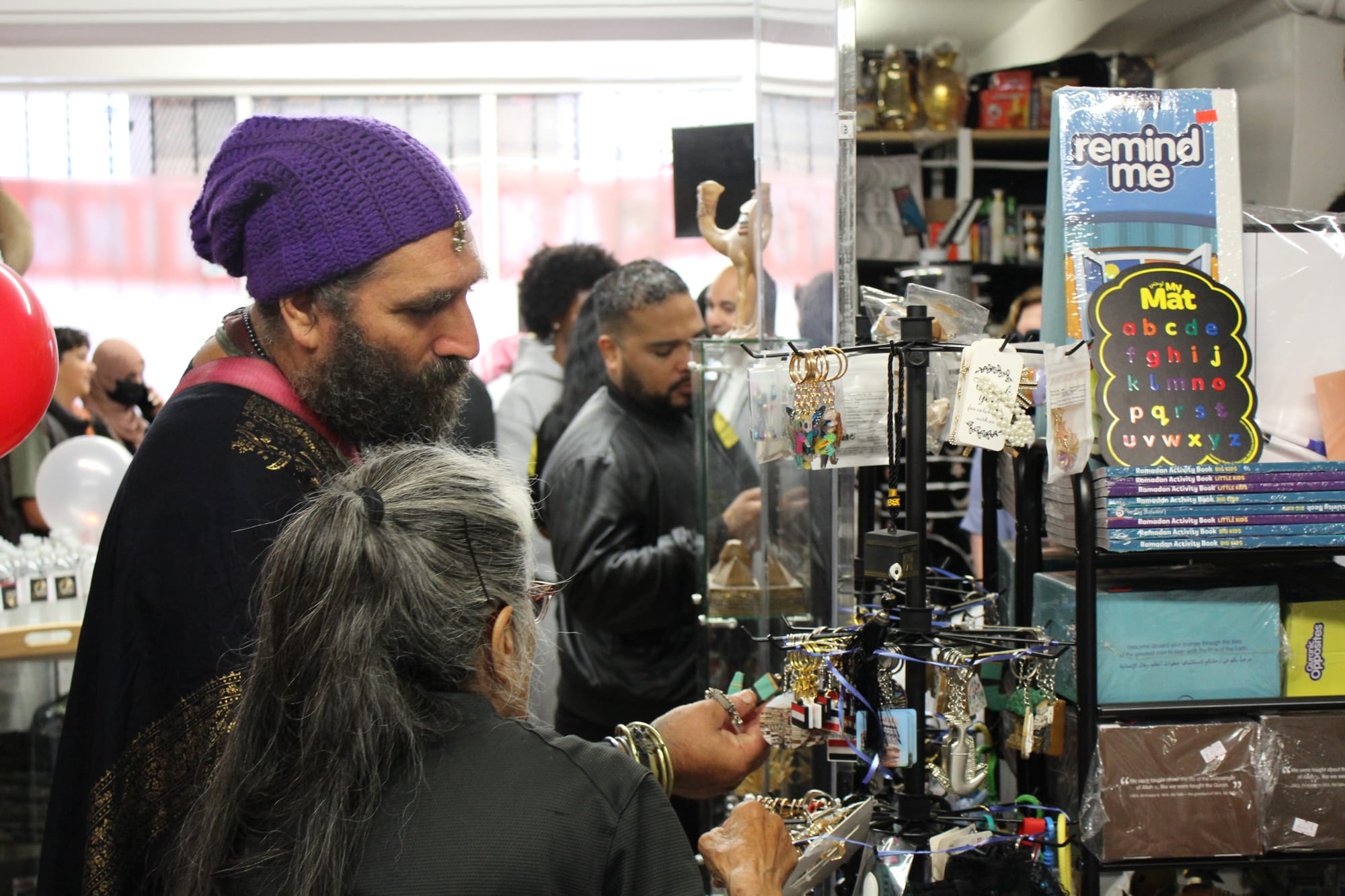
When Tatiana arrived in San Francisco, she found herself trying to shop for clothes online, which often led to disappointment. She couldn’t feel the fabric of a garment through a screen, it was hard to tell if something was high-quality, and she had no idea whether or how it would fit. But what choice did she have? There was nowhere local to go. And Tatiana was not alone in this. San Francisco, and the Tenderloin in particular, is home to many Arab and Muslim families — a few hundred of which, as Mahmood pointed out, live right across the street from Sheba at 201 Turk St.
“It makes a difference to have a store like that here,” said Bushra Alabsi, Jalal’s sister. Shopping in person for the kinds of goods Sheba offers used to mean going to the East Bay, she said. That’s not always practical for busy parents, especially those who have to rely on public transit.
Now that Sheba is open, locals have items from even farther afield literally at their fingertips — originating from Yemen, Turkey, Egypt, the United Arab Emirates, and Saudi Arabia.
How do Jalal and Tatiana stock these things without also resorting to online buying?
“My husband has friends who live in these places and help us to find sellers and make recommendations,” Tatiana told me. The suppliers in other countries get on a video call with the couple, who make their selections.
“He says, ‘This one, this one, and this one.’ They make a package, and in two or three weeks, everything is here,” Tatiana said.
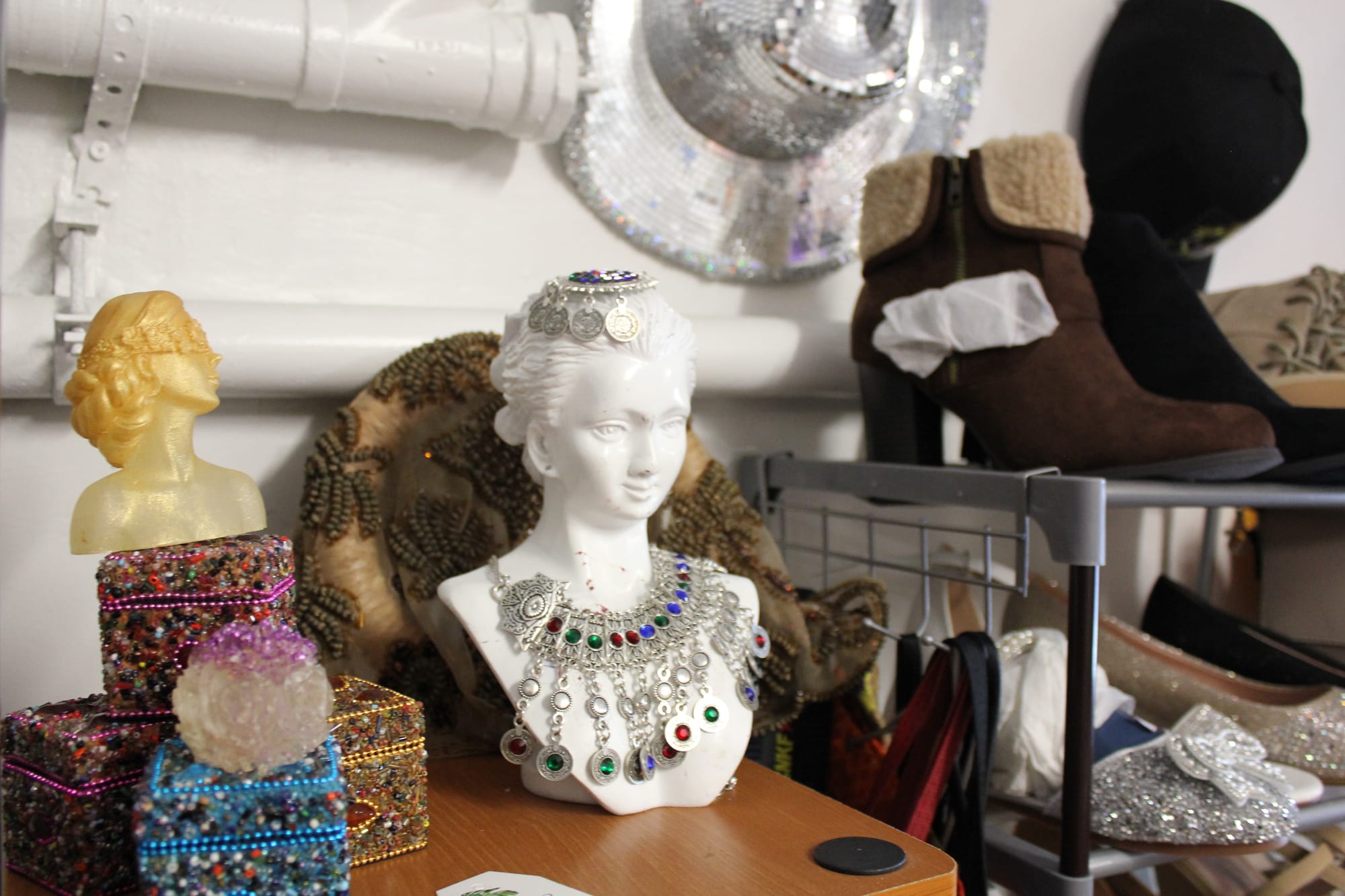
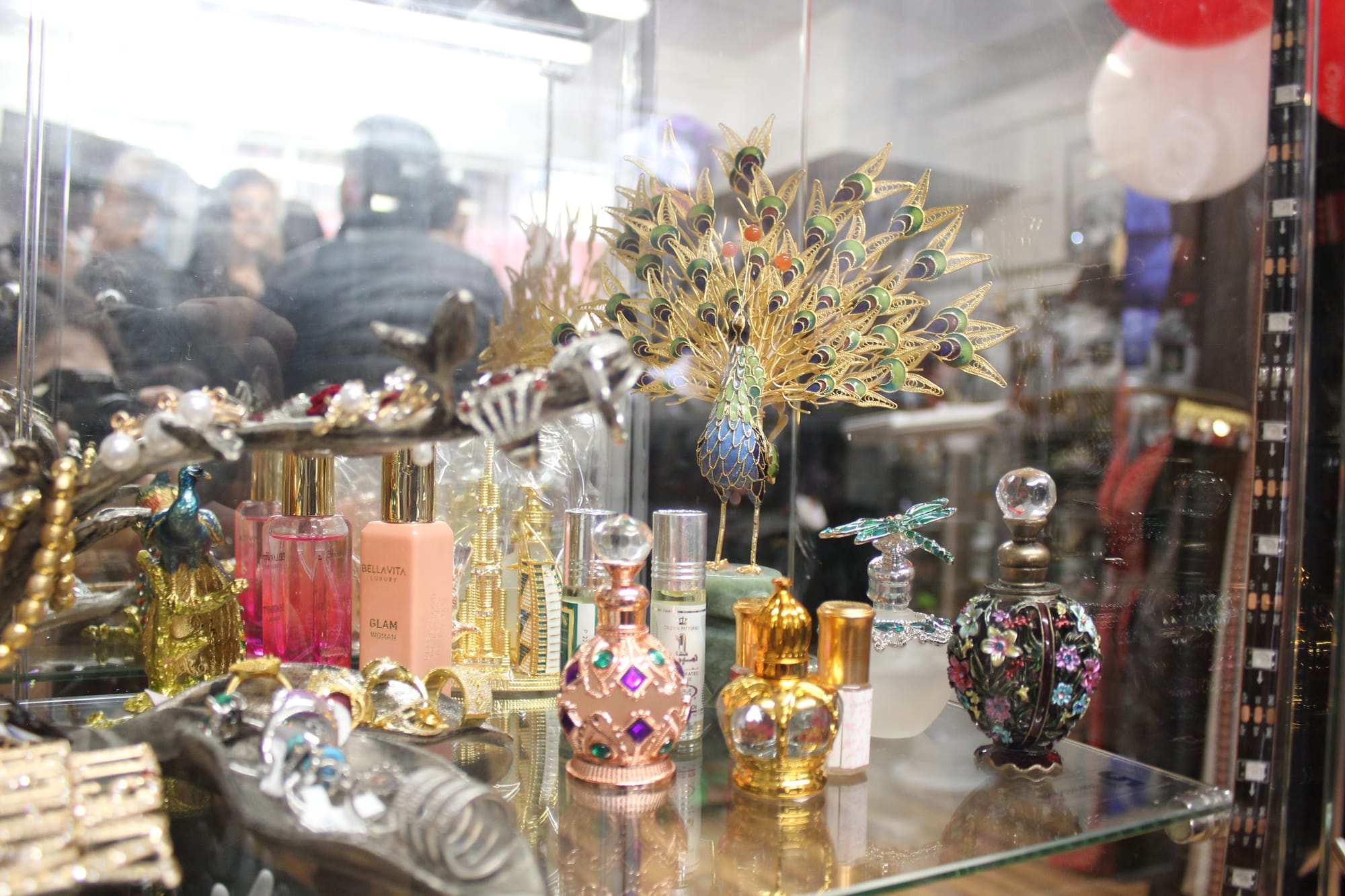
The result is a store you can walk through several times and have something new and dazzling catch your eye each time. And if you get a chance, I highly recommend asking about the items that stand out to you. Tatiana showed a black dress and head covering featuring an elaborate silver collar, intricate medallion-like adornments, and small red beads. It’s a traditional Yemeni dress, and usually worn as part of wedding celebrations or in the four-day period during which a new baby is welcomed to a family. The beads are usually made of coral from the Red Sea, she explained.
“I want this store to be not only a store, but for people to learn about culture like I learned about culture,” Tatiana said. “It’s to find love and history, the Yemeni love for all people.”
Which is to say: You don’t have to be Yemeni, Arab, or Muslim to find something beautiful or learn something new at Sheba.
“It’s for everyone here,” Jalal said. “What we do, we do for the community.”

A mutual love of literature sparked romance between David García and María Fernanda Ramírez. Now they’ve opened Niebla bookstore on Golden Gate Avenue.

These rescuers help pigeons whose feet have become tangled in debris. Spending an afternoon with them changed the way I see urban wildlife.

The sixth annual event was a hit, with food, performances, activities, and information on addiction treatment.


A Tenderloin filmmaker’s documentary is on view alongside a graphic artist’s work.
Stay tapped into the Tenderloin: Our email newsletter sends every article to your inbox. Unsubscribe anytime.