


This Tenderloin-raised filmmaker and cinephile is opening a tiny theater and a tea room
Maria Judice's BlackMaria II champions innovative, under-resourced films. Up next: A tea house.

When Maria Judice and her young, single mom were bouncing around San Francisco, the filmmaker says, the Tenderloin was a reliable refuge when they needed one.
Along the way, she also spent time in Noe Valley, Lakeview and Bayview, and attended St. Emydius School in Ocean View/Ingleside, before studying creative writing at San Francisco State University and earning a Master of Fine Arts degree from Cal Arts.
But when times were tough, “The neighborhood provided food, shelter and community,” she recalls.
“I was also ‘raised’ by the Tenderloin as a teenager and young adult,” she told the Tenderloin Voice. In the ‘90s, “it was a center of nightlife, art, music and cultural exchange. That creative spirit remains at the core of the neighborhood today.”
Nowadays, she’s wearing several hats as vice president of development, impact and media at the nonprofit Code Tenderloin, but a key role there is helping people through transitions into living-wage jobs.
And in her “free time,” she’s busy blazing a trail for fellow filmmakers by providing venues and food for thought to help foster their growth.
This month, she’s opening BlackMaria II, a 30-seat movie house and art gallery at 560 Larkin St., across the street from the gates of Little Saigon.
And once that’s launched, she’s putting the final touches on LibreTé, a tea house and gathering spot in an adjoining space in the same building, around the corner at 583 Eddy St.
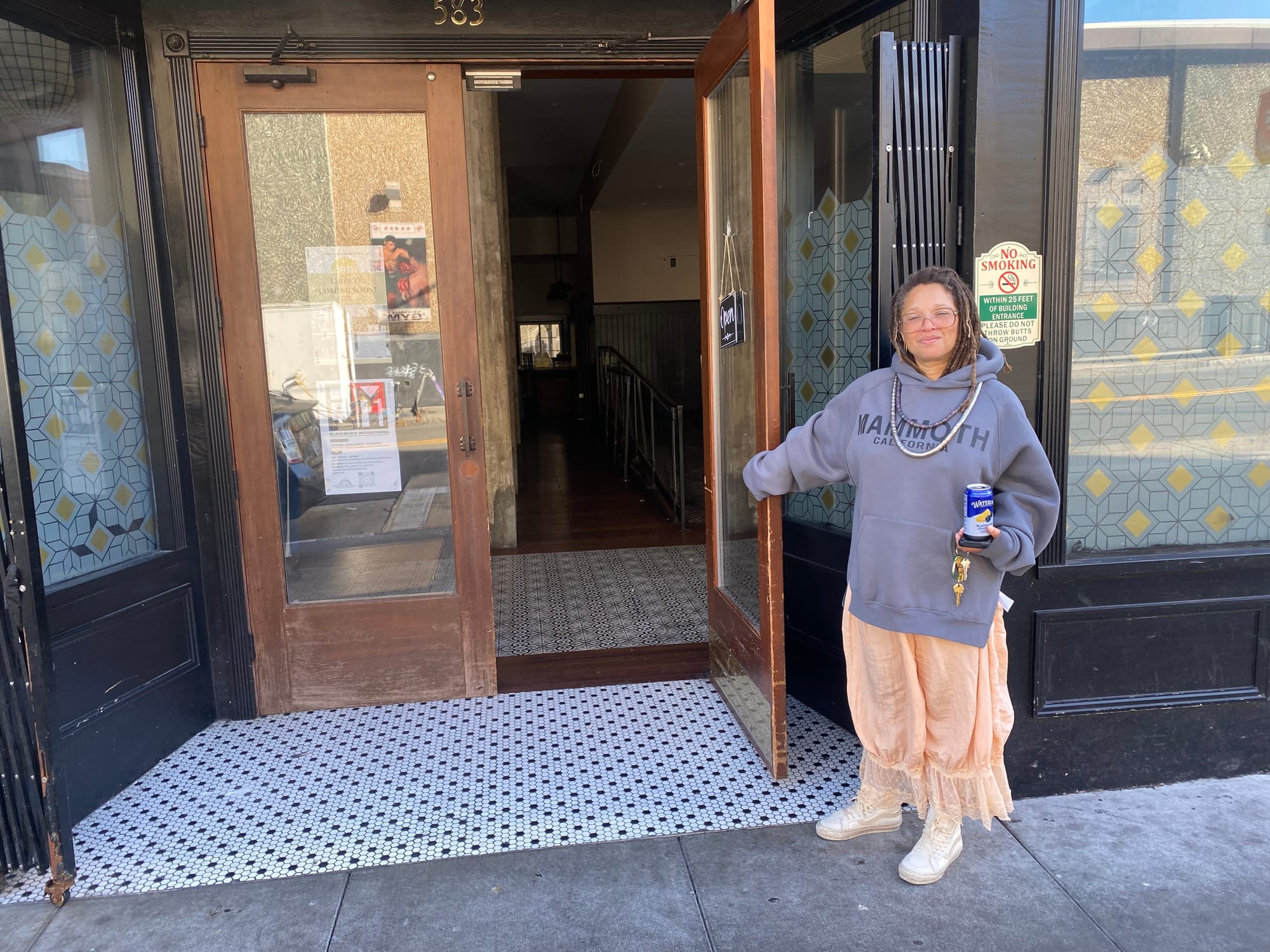
“Film art is my thing,” she told the Tenderloin Voice. “My heart beats so hard for anyone who walks through my doors.”
The path to BlackMaria II
Judice has made eight movies in the Bay Area, taken home some awards for her troubles, and is no stranger to the film festival circuit.
Judice’s 2008 short, “Palm Trees Down 3rd Street,” shot in black and white, explored family and belonging against a San Francisco backdrop. It was dubbed “a masterpiece” by a critic at Film Threat.
Her play about the struggles of sustained uprisings, “A Metaphor in 3 Acts,” was chosen for one of the initial productions of the Obsidian Theater Festival in Detroit in 2020. And in 2021, “Neptune Frost,” an Afrofuturist sci-fi film she’d co-produced, premiered at the Cannes Festival in France.
Her debut feature, 2022’s “Elephant,” was in part a response to the challenges of being expected to carry on with everyday life amidst the “elephants in the room” of racism, oppression, and violence. The film was created after the police killing of Michael Brown in Ferguson, Missouri in 2014.
Amplify the Tenderloin’s voice!
The Tenderloin Voice is a newsroom that gives this neighborhood its say, to build community power. You can help us grow louder.
In 2024, Judice was part of a collective that organized a series of screenings called “Black Film as Protest” at 465 South Van Ness Ave. The space was dubbed BlackMaria, named for a film production studio created by Thomas Edison in the late 1890s. Judice likes to imagine Edison turning in his grave at the idea of Black Maria inspiring the name of an organization that challenges the exclusionary cinematic traditions of his era.
The collective behind BlackMaria I highlighted “films that had been shelved,” she said, returning works to circulation after their runs at festivals and other institutions had concluded.
The series included nine filmmakers — local, national and international — to screen their films, activate the gallery, and host master classes. Among them were, Donovan Gardener, Jessica Jones, Lu Stinnette, Aliyah Dunn-Salahudin, B. Monét, Shantré Pinkney and Dwayne LeBlanc.
LeBlanc is a self-taught, first-generation Caribbean American whose work has raked in awards and critical acclaim around the world and in the press.
But that kind of acceptance and growth too often is unattainable for emerging filmmakers, Judice says. The logistics of the medium limit who gets to tell their own stories.
Film, she said, “is still very expensive and time-consuming to create. It really is a pay-to-play game, so you’re missing films from working-class filmmakers.”
Once a film is created, the industry’s limited opportunities for distribution make it difficult for filmmakers to keep their work in circulation and sustain their careers.
“Even films that have screened at major festivals, aired on cable networks, or been exhibited in arts institutions can struggle to maintain relationships with audiences beyond their initial release,” Judice said.
She cited New York Black independent filmmakers Kathleen Collins and Bill Gunn, who people within the industry cited as particularly overlooked in their careers. She also pointed to filmmakers from the “L.A. Rebellion” school, such as Haile Gerima — with whom she studied — Charles Burnett, Julie Dash, Billy Woodberry, Larry Clark, and Zeinabu irene Davis, as others whose artistic contributions often outpaced the recognition, distribution, and institutional support available to them.
The L.A. Rebellion filmmakers challenged Hollywood conventions of storytelling and representation by embracing experimental forms, everyday experiences, and alternative narratives, Judice said, and are now seen as pioneers of independent cinema whose work is studied, restored, and celebrated internationally.
“BlackMaria brings art, independent, and global cinema back into direct relationship with audiences, without the middleman,” Judice said.
BlackMaria’s second act
BlackMaria II will also function as a walk-in art gallery in the afternoons.
Judice and her team hope to show films four nights per week and on weekends, charging a sliding scale of $15 to $30. She said she and her team approach cinema as “study, discourse, and disruption,” which means not just screening films but becoming a venue for artist talks, sound performances, and seminars as well.
One series of seminars, titled Rooted in Decolonization and Abstract Thinking, or RDA, challenges conventional societal structures through film, writing, and philosophy.
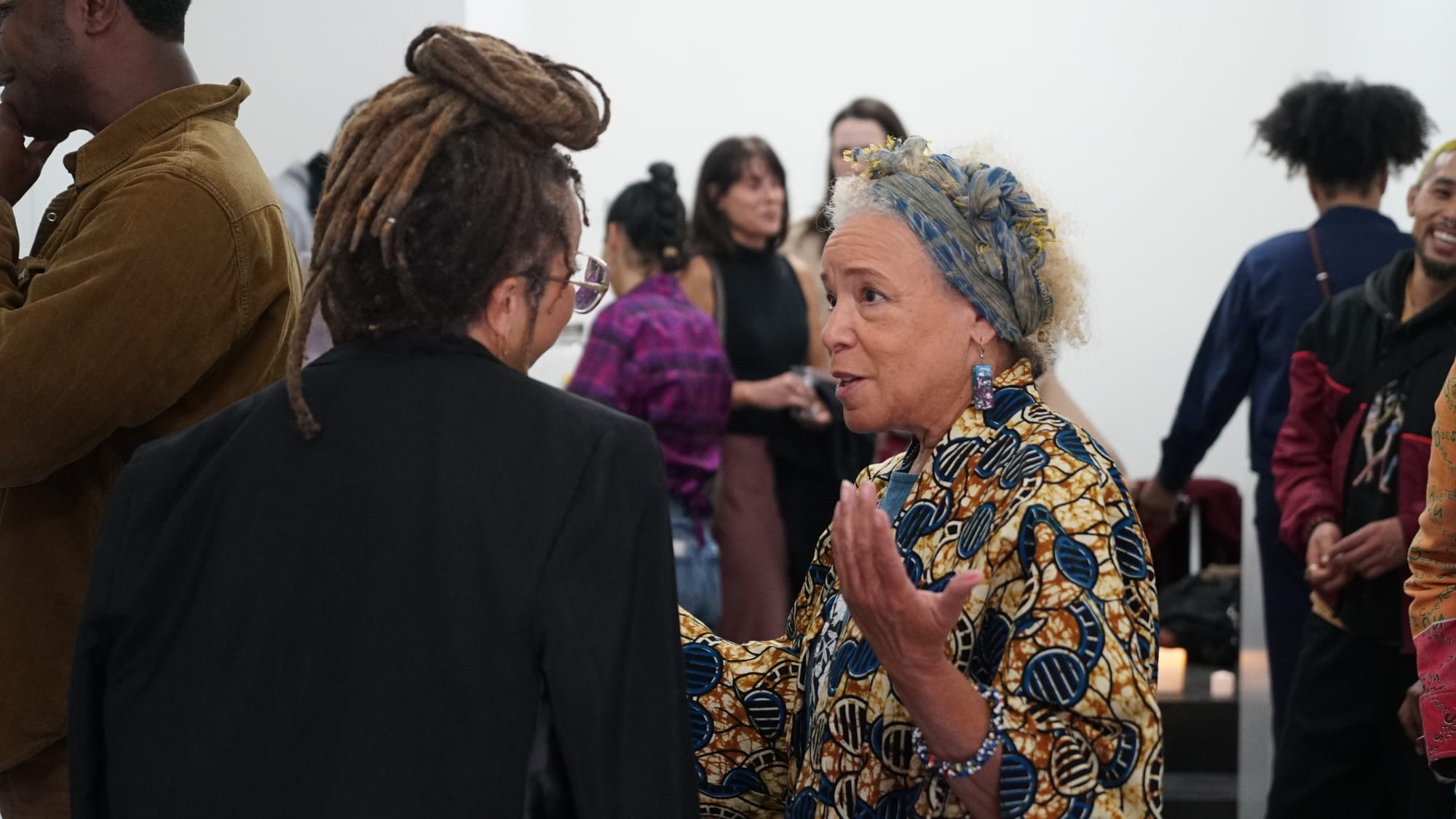
They range from four to six weeks and are offered year-round at a micro-tuition rate of $35 to $55, depending on if they’re in-person or virtual, with both partial and full scholarships available. They’re open to anyone, though targeted at adult learners, with no prior filmmaking experience required.
Besides screenwriting, other topics in the RDA curriculum include acting, sound, camera work, other jobs in the industry, and funding. Judice herself, who’s taught at institutions including Rutgers, Cal Arts, UC Stanislaus, Stanford, and San Francisco’s African American Art and Culture Complex, has led seminars on film character development and screenwriting through a decolonized and abstract lens.
“The intention,” she said, “is not simply to teach the mechanics of filmmaking, but to cultivate critical inquiry, creative autonomy, and new approaches to cinema as an artistic and intellectual practice. At the center of the series is the fundamental proposition that Black film is inherently an act of protest,” she said.
Gathering to dream
Hot on the heels of BlackMaria II’s launch this month will come LibreTé, a tea house and gathering spot in an adjoining space around the corner at 583 Eddy St.
Judice anticipates an early 2027 opening for LibreTé, a “gathering place for tea, film and dreaming … built by a team with roots in art, organizing, education and food, aligned to the mission of resistance and care.”

It’s got picture windows, high ceilings, hardwood floors and ample elbow room. Once the grease from years of fried food is fully cleared and permits are obtained, there’ll be “restaurant-service” fare — food prepared off-site — and non-alcoholic drinks available, and a DJ booth too.
Local vocalist, composer, and Red Clay Sound Haus collective founder Tossie Long will bring a “multichannel experiential sound experience” to the site. The BlackMaria team also includes Zach Sexton providing technical support, House Director Malcolm Mobley covering guest services, and Andre Carter as scholar advisor.
Although BlackMaria Microcinema began as a project run “from backpacks in borrowed spaces,” as Judice put it, some new grants have made these latest ambitious steps possible. The microcinema received funding through the nonprofit SF New Deal’s Downtown ENRG program, and LibreTé received a grant from the city’s Office of Economic and Workforce Development Tenderloin through its Storefront Opportunity initiative.
Currently adorning the walls of the microcinema/gallery are photos of some of the people who’ve inspired Judice along the way, such as writers Octavia Butler and Maya Angelou, poet Bob Kaufman, and the abolitionist Mary Ellen Pleasant.
San Francisco's smallest park, at the corner of Bush and Octavia streets, is named for Pleasant, the first African American millionaire, who grew her earnings as a cook into a real estate portfolio that eventually supported militant abolitionist John Brown and Harriet Tubman’s underground railroad.
“I think about the city as a place where people, histories, cultures, and ideas collide like atoms, generating new worlds, new understandings and pathways toward futures we haven’t yet imagined,” Judice said. “We’re pouring tea and watching films in the historic San Francisco Tenderloin District … ushering a return to listening, neighbors, and aligning those wandering hearts in the mission of resistance and care.”

Read next


Dreams of peace: Remembering TL Times photographer Lance Woodruff
From the Ho Chi Minh Trail to the streets of the Tenderloin, Lance’s lens captured the sacred in everyday lives.

Tomorrow: The TL votes together, and you can join
If you want things to change, Windy Click wants you to vote, and she’ll take you and everyone else to City Hall to get it done.

Demonizing the Tenderloin is nothing new. It needs to stop.
The Tenderloin is full of life. It is not a bleak hellscape. A recent video game made my community the backdrop to dehumanizing violence. This depiction could not be farther from reality.
