
Attempt to save three TL trees shows the limits of the public’s power
The trees that inspired an appeal are gone. The ability to make that type of appeal could be next.
The trees that inspired an appeal are gone. The ability to make that type of appeal could be next.

The city honors a beloved local who was a tenant advocate, Safe Passage worker, park steward, Vietnam War veteran, and more.

We reflect on this local leader’s career as he departs Boys & Girls Club of San Francisco’s Tenderloin Clubhouse.

The trees that inspired an appeal are gone. The ability to make that type of appeal could be next.

Let’s say a city department plans to remove a tree on your street. Should you, a member of the public, be able to intervene? Should your objection trigger hearings that force officials to show up, listen, and consider changing course?
City decisionmakers are weighing these questions as they consider a package of tree-related reforms put forward by San Francisco Mayor Daniel Lurie, intended to cut administrative red tape. The proposed legislation would limit the public’s ability to appeal tree removals done by the city. It would also let private developers pay a fee instead of planting the trees that would otherwise be required on their real estate projects.
The Planning Commission will consider the in-lieu fee aspect of the legislation this Thursday, and a Board of Supervisors committee is expected to take up the full package later in the month. Many residents have written to the city calling this an anti-transparency move that reduces government accountability and threatens the city’s already sparse urban canopy.
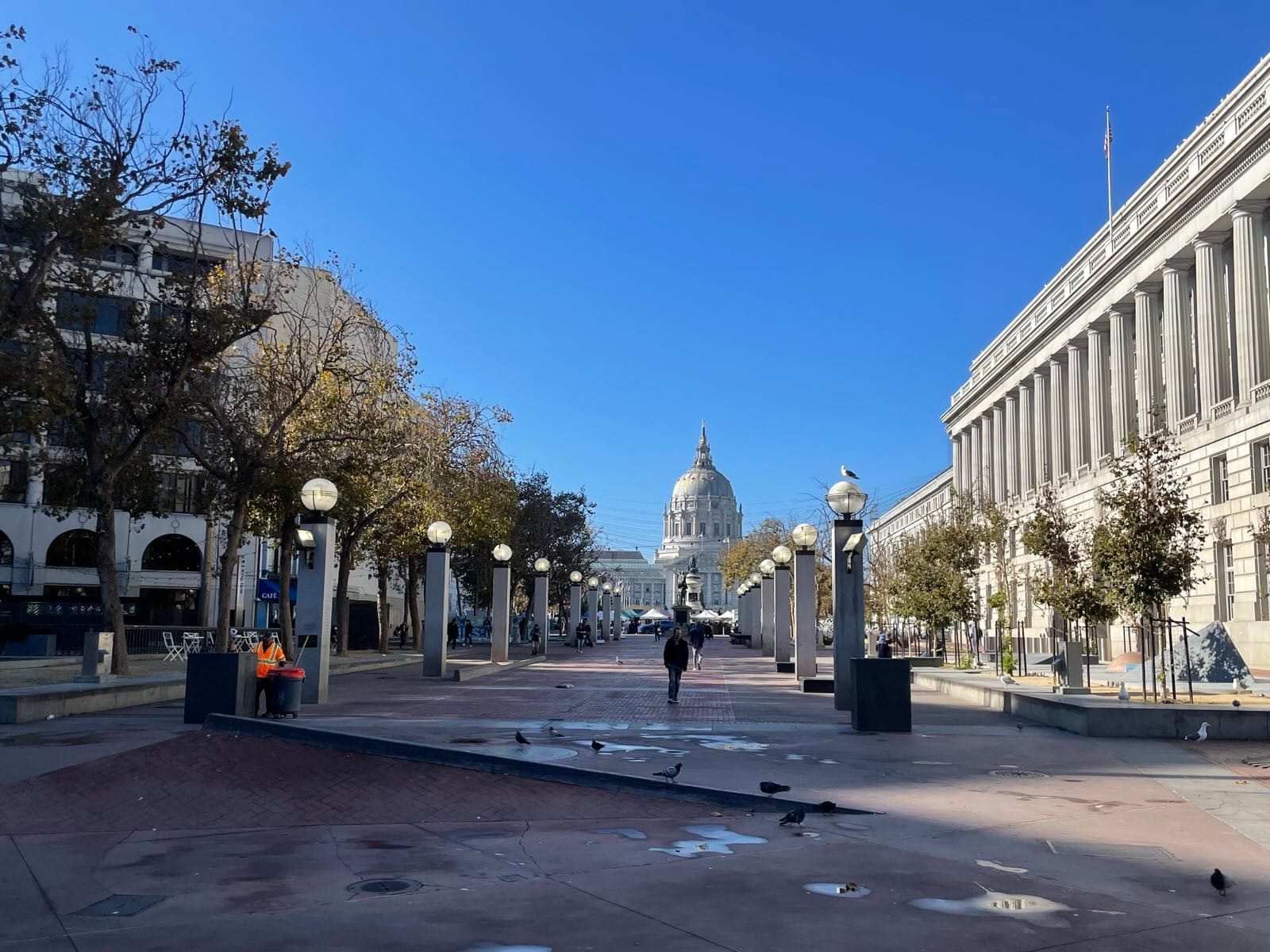
But the proposal prunes back a public right that is already difficult to exercise effectively. Under the status quo, there’s no guarantee the government won’t ignore an appeal in the first place. That’s what happened at U.N. Plaza in early 2025, when the city broke its own rules to remove a handful of trees, then sought and abandoned an effort to fine itself for the infraction. The case would have flown under the radar were it not for a local advocacy group called the Tenderloin Tree Campaign. In fact, that incident rankled oversight commissioners so much they actually called for the public’s right to appeal to be strengthened.
“A department head, somebody, made the decision: Screw the citizenry, screw the protocol,” said Board of Appeals Commissioner Rick Swig at an October hearing on the matter. “At the end of the day, where’s the accountability?”
Here’s what happened.
The trees slated to be taken out — deemed “hazardous” but not in need of emergency removal — were supposed to stay in the ground for 15 days, long enough to give members of the public a chance to object. The Tenderloin Tree Campaign did so by filing an appeal. But the Recreation and Parks Department removed the trees before the appeal window had elapsed.
This process led to a hearing before the Board of Appeals, where commissioners rebuked the parks department and deliberated over what power they had to make city officials follow these laws.
Dan Mauer, a project manager with the parks department, told the commissioners that officials had been under pressure to take the trees out in time for an event celebrating the completion of the new skate park at U.N. Plaza.
This did not sit well with the commissioners, who grilled Mauer on who had made the decision (the implied answer was then-director Phil Ginsburg) and whether the department’s oversight body had been consulted (it had not). Commissioner Swig said the decision to remove the trees so quickly disrespected Tenderloin Tree Campaign leader John Nulty and his brother Michael, and their appeal. Swig encouraged the department to formally apologize to the Nultys (Mauer said he had done so) and recognize them for their decades of advocacy work.
“Trees were something that was secondary to me 10 years ago. These guys have really brought me around, personally, and I thank them for that,” Swig said.
But mostly, the commissioners seemed frustrated by the shortcomings of the appeal mechanism itself. If the mandatory waiting period couldn’t keep an antsy city department from going ahead with a project, then what would?
One possible answer: the threat of a fine. The city could punish itself (one department could fine another) for violating the appeal procedure. The Department of Public Works, which has jurisdiction over U.N. Plaza, had in fact moved to fine the parks department $30,000.
The parks department objected. At the hearing, representatives laid out their reasoning: They were already spending more than $30,000 on new trees. Not only were they replacing those they had illegally removed, they were adding many more, to replace trees that Public Works had taken out. And they were also covering the high cost of irrigating those trees.
In the end, Public Works would agree, and choose not to impose the penalty.
“While a fine is punitive, the remedy of planting 23 new trees — getting them in the ground and, as importantly, doing irrigation for them — is what we wanted to see happen,” Public Works spokesperson Rachel Gordon later told me. “So there’s a greater benefit than just having the fine.”
Here’s the thing, though: That decision wasn’t reached until after the Appeals commissioners had their discussion. And, not knowing whether a fine would be imposed, commissioners were very unhappy with the prospect that this was the best compliance tool available. For one thing, the Board of Appeals had virtually no power here. It wasn’t up to them to decide on the fine or what the parks department should do to make up for its actions. They could decide only whether the removal permit had been properly issued. Beyond that, all they could do was make recommendations. Second, they were exasperated with the idea that taxpayer money would be used to correct a department’s scofflaw behavior.
“It’s the city paying the city,” said Board President John Trasviña. “So how does that discourage this conduct?”
Mauer, from the parks department, responded with an apparently nervous laugh that the deterrent was “coming and getting yelled at in front of the Board of Appeals.”
“I don’t have a long-term response on how others will act down the line,” he said. “This is something that we don’t take lightly and it wasn’t a decision that was made flippantly.”
The commissioners felt strongly that the public right to appeal deserved to be strengthened. Weeks after the hearing, they sent a letter to the Board of Supervisors and the mayor, explaining the procedural breach, how little could have been done to prevent it, and that better enforcement mechanisms were needed.
But that letter may have fallen on deaf ears at the Mayor’s Office, which at the time was putting forward the proposed legislation I mentioned at the beginning. That proposal would eliminate the appeals process altogether for cases when city departments remove hazardous trees. It would also take other tree removal cases out of the hands of the Board of Appeals, an entity without skin in that game. Instead, the Director of Public Works would decide on the appeal.
It’s not clear if what happened at U.N. Plaza inspired the legislation. The Mayor’s Office did not return a request for comment. The proposal was originally presented as an effort to streamline the city’s permitting and regulatory processes.
Josh Klipp, a self-described “recovering” attorney who helped the Nultys file the U.N. Plaza tree appeal, was deeply dismayed by the proposal. Klipp co-founded a program that came to be known as “Mission Verde,” through which the city and Mission District community members collaborate to care for street trees. That effort, Klipp said, began when the city moved to take out trees along the 24th Street corridor, and members of the public appealed. If the mayor’s proposed legislation had been in place then, the city would have removed the trees without fanfare and the discussions and negotiations that led to the creation of Mission Verde would never have happened.
The appeals in the Mission were “more than just about trees,” Klipp said. “This is about how this community felt. How they were being treated without their input, without their involvement.”

The city honors a beloved local who was a tenant advocate, Safe Passage worker, park steward, Vietnam War veteran, and more.

We reflect on this local leader’s career as he departs Boys & Girls Club of San Francisco’s Tenderloin Clubhouse.

They’re available at our office and we’re also happy to deliver anywhere in the neighborhood.

In a neighborhood known for busy, dangerous roads, kids got a rare chance to bike in safety.
