
Beethoven is ‘theirs too’: Tenderloin families bask in orchestral oasis
The intimate performance was designed to make classical music feel more accessible.
The intimate performance was designed to make classical music feel more accessible.

Transgender Day of Visibility is March 31, a day to recognize the forces bearing down on our community and confront them with joy.

At the ribbon-cutting for Café Melange, Mayor Daniel Lurie acknowledged the work of local entrepreneurs.

In a neighborhood known for busy, dangerous roads, kids got a rare chance to bike in safety.


The Tenderloin Voice publishes opinion pieces by community members.
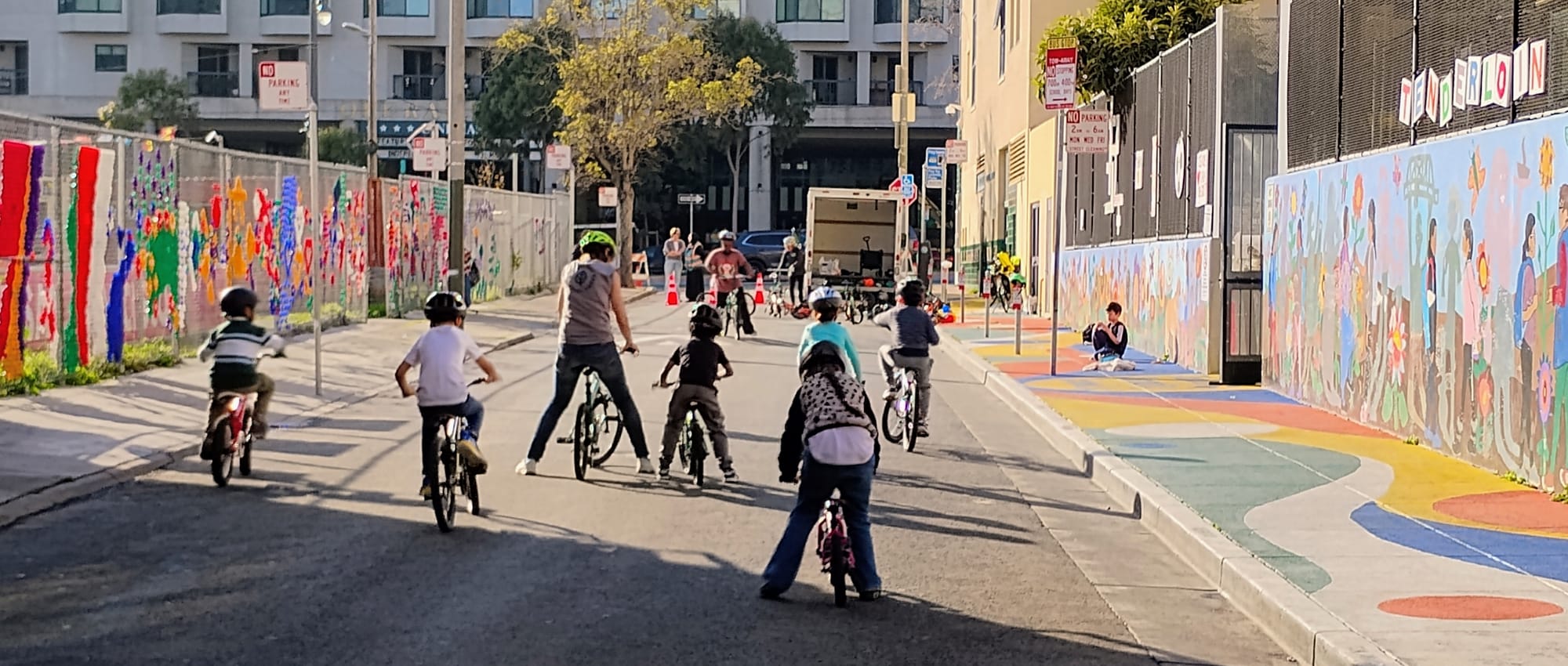
For a brief moment, it looked like something from my own childhood: a few dozen young kids riding bikes in the middle of the street. The most noticeable difference between then and now was these kids all wore helmets. But the gentle chaos as they weaved, wobbled, rolled, and pedaled alongside their friends was deeply familiar. The same joy, happy sounds, and occasional tears as when I was younger.
There were of course some difficulties and setbacks. One beginner became increasingly frustrated as he tried to get the bike to move and to stay in control. With reassurance and encouragement from the adults, just like that, he got the hang of it. In addition to a number of near misses, there was one head-on collision that caused a rider to flip over the handlebars. Her injuries were too minor to get in the way of riding bikes with friends, and she was back on two wheels in no time.
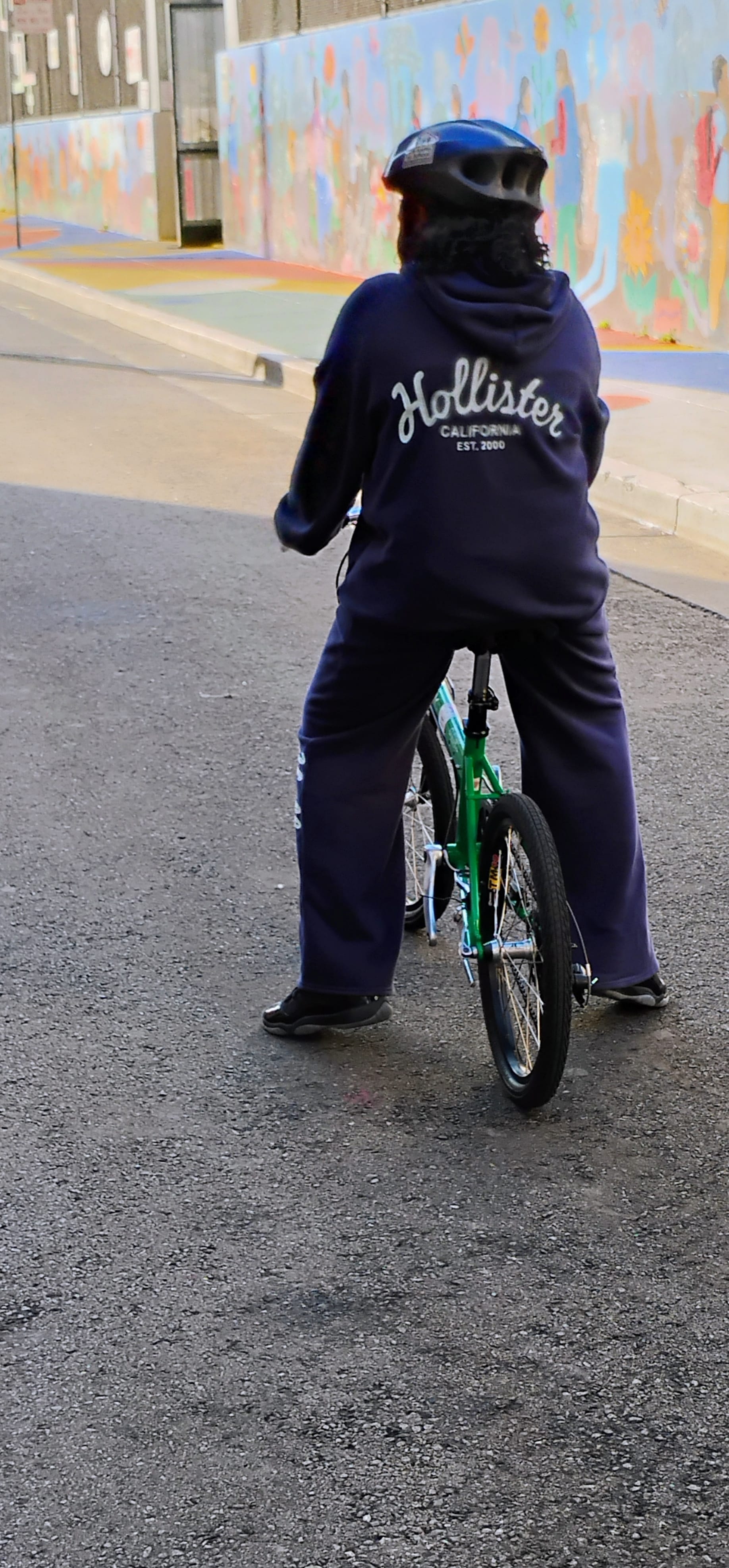
While playing in the street was an everyday occurrence where I grew up — something I took for granted — for the children I was watching on that recent Wednesday it was far too rare. After all, that’s dangerous in the Tenderloin, a neighborhood where nearly every street is a high-injury corridor; the few roads that don’t make the list include one-way alleys between blocks on the western edge.
Elm Street, the small patch of pavement where the kids were riding, is one such alley. Situated adjacent to Tenderloin Community Elementary School, the neighborhood’s only public school, Elm is an ideal street to permanently close to cars and cede to local children, and to the neighborhood as a whole.
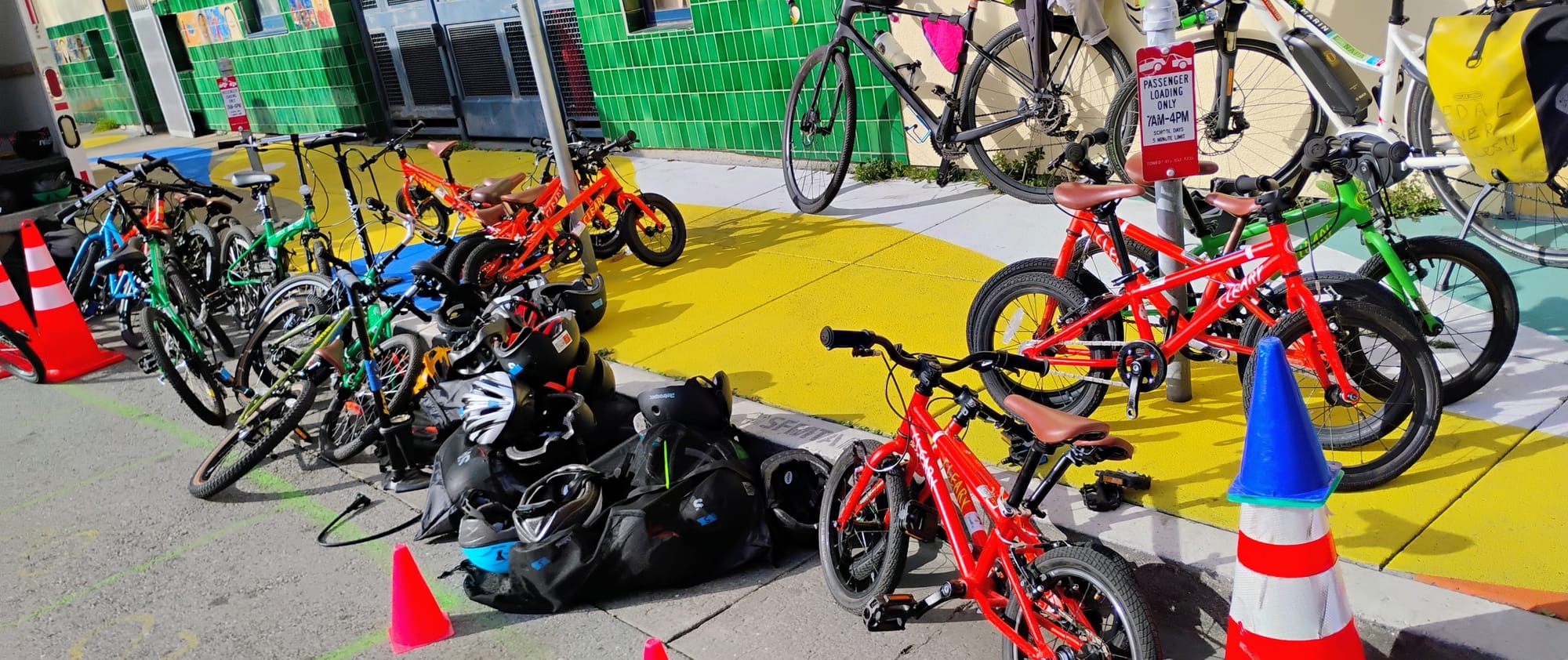
I’ve been working toward that goal for about five years, as a parent of a former student there and a member of the group called Friends of Elm Alley. That entire time, I’ve shown up twice daily on school days to personally close the street to car traffic for roughly one-hour windows, before and after instruction. At first I wanted to give the students space to socially distance outside during dropoffs and pickups, while the city was still working its way out of the pandemic. We’ve recently started partnering with the San Francisco Bicycle Coalition, which hosts these riding events in the closed street so that the kids can feel a type of freedom that is probably foreign to many of them.
It turned out to be rather difficult to interview anyone that day, but actions speak louder than words. Amira, a second grader, had come with her mom and brought her own scooter; after a while, though, she set the scooter aside and grabbed a bike. As the next group of kids came out for their turn, she said “I was waiting for these children to get out here,” and she pedalled off before I could get to my questions.
I tried to start a conversation with another girl, but she too interrupted me when her friends came out to ride. “Wait! I gotta go!” she said. And then all I saw was her back as she headed up the gentle incline to join the others.
When I asked Lukas, one of the youngest, what he thought about riding in the street, his initial short answer was a perfectly phrased giggle. Then he elaborated: “It’s fun!”
Jenrie had dressed as a pilot for Halloween, so I figured he knew how to fly a plane. When I asked him which he liked more, flying or riding a bike, he didn’t hesitate: “Biking!!”
I talked to the mom of a third and fifth grader about the afternoon event. She told me her older child, Isaiah, has a bike that he regularly rides to school, but that his sister Maya is happy with her scooter and does not want a bike. When I checked in with Maya that afternoon after she’d been maneuvering around the street for a while, she’d had a change of heart. “I kind of want a bike” now, she said. Isaiah chimed in, “Yeah, I think my sister should get one.”
Soon, the need for this and other open spaces in the Tenderloin will likely become even greater. Though the plans have not been finalized, the Department of Public Health has proposed yanking funding from the popular Sunday Streets events held throughout the city in the summer and early fall seasons, and that would cost the Tenderloin one of its public, recurring outdoor events.
But that will just mean that we need to create local replacements. With care and support, this small stretch of Elm is poised to become the Tenderloin's Every Day Street to play, gather, and — of course — bike.

The intimate performance was designed to make classical music feel more accessible.

Transgender Day of Visibility is March 31, a day to recognize the forces bearing down on our community and confront them with joy.

At the ribbon-cutting for Café Melange, Mayor Daniel Lurie acknowledged the work of local entrepreneurs.

The neighborhood’s bad reputation made Niko embarrassed to admit it was home. His grandma and others helped change his mind.
