
Tenderloin family summit lets residents weigh in on future spending
The city is conducting a needs assessment to help inform programming and budget decisions.
The city is conducting a needs assessment to help inform programming and budget decisions.

The popular program pays musicians to play for the public, including in the Tenderloin. Interested artists can apply until Oct. 1.

Issue 4 of the TL Voice print edition is being distributed now.


A tragic death galvanized them to help people grappling with drug use and mental illness. Now they’re proposing legislative change.

Theris Coats Sr. and Richard Beal like to say they’re turning “pain into purpose” — and both men have experienced pain in profound excess. But on a sunny late April afternoon in the Tenderloin, they were celebrating. It was the one-year anniversary party for their organization, Brothers Against Drug Deaths, formed to support people battling addiction. They were also marking the grand opening of their small ground-floor office on Eddy Street, which was filled with proud, grinning allies, many of them high-ranking city officials.
Seeing what the co-founders have built “reminds me of the strength we can find in adversity,” said District 6 Supervisor Matt Dorsey.
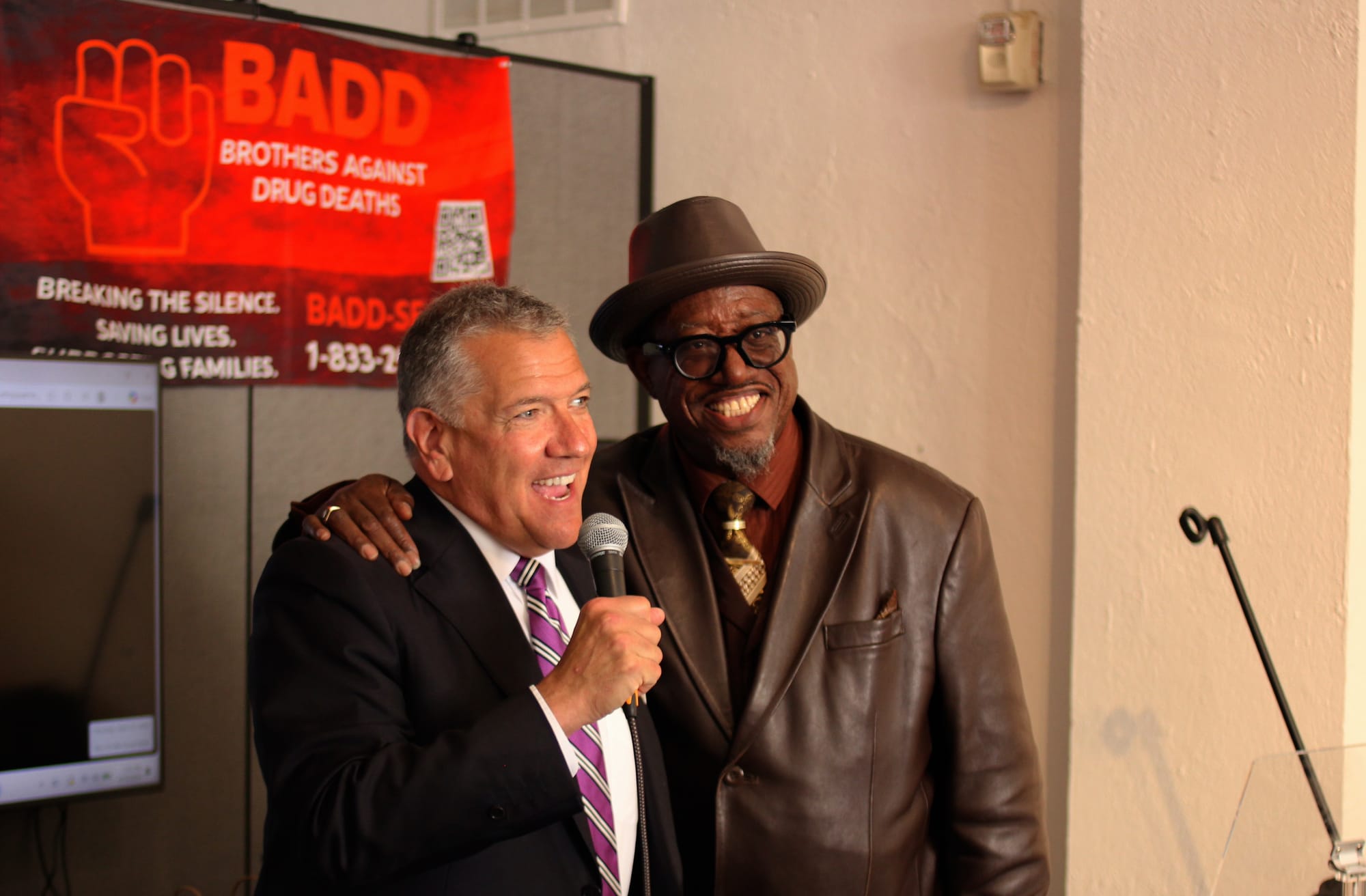
Coats acknowledged that he would not be doing this work were it not for his son’s death.
Theris Lee “TC” Coats II had long struggled with both mental illness and drug addiction. In March of 2025, Coats was on the cusp of finally getting help to his son. But then TC suffered a fatal overdose while in custody in a San Francisco jail. He was 33 years old.
TC’s devastated father sprang into action. Barely a month after his death, Coats and Beal founded Brothers Against Drug Deaths, or BADD, in honor of TC. They offer services to people facing addiction and mental illness. And through many approaches, including policy advocacy, they seek to support families trying to help their loved ones access treatment.
“It’s not enough to just have services offered, we need to help them go through that system to recovery,” said San Francisco Health Director Daniel Tsai.
In Beal, Coats has a co-founder who knows his way around the world of addiction services and treatment in San Francisco, and who is intimately familiar with the grave dangers posed by addiction. Beal himself is in recovery. He has lost two brothers to overdoses, as well as his first wife — who also happened to be Coats’ younger sister. Beal has earned more than half a dozen certifications in the substance-use support field, racked up countless awards and commendations, and is the director of recovery services for Tenderloin Housing Clinic. He has also published a book about his experiences, Recovering From The Game. And because he has been involved in policy work, he knows some major players in the political scene.
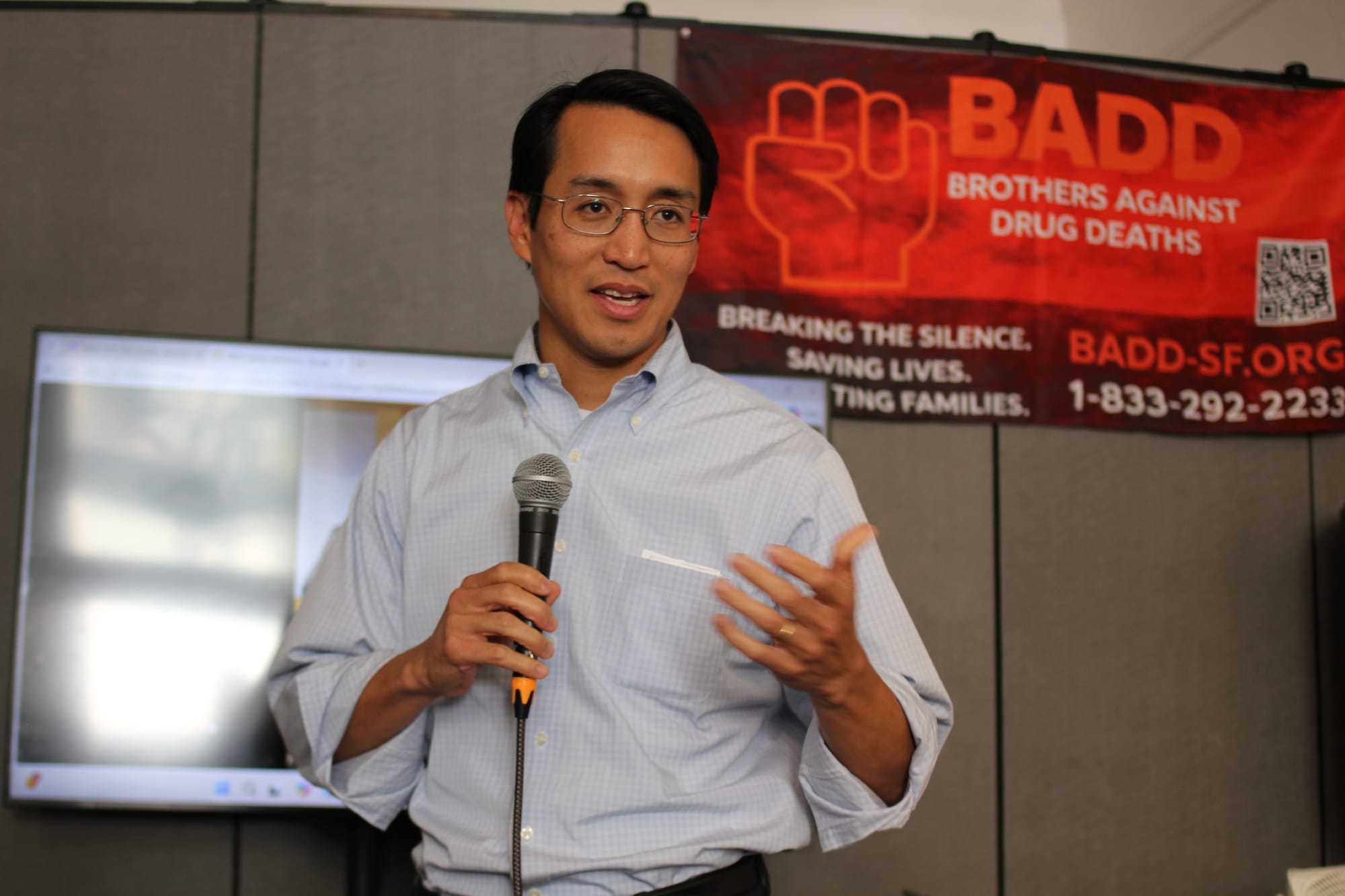
BADD’s focus is on Black and underserved communities. San Francisco’s overdose statistics have long shown deep racial disparities. Tsai said the rate of overdose deaths among Black San Franciscans is 5.5 times higher than that of the general population.
“That disparity hasn’t decreased along with the decrease in deaths,” he noted.
So it’s meaningful that the leaders of this organization are two Black men directly affected by the overdose crisis.
“Seeing this led by individuals rooted in our community is special,” said Theo Ellington, executive director of the Ruth Williams Bayview Opera House and a candidate for District 10 supervisor in the November election. “The harsh reality is that Black people are at the top of the list of [those affected by] every social ill in San Francisco. Simultaneously, the first programs to be cut are those that serve Black people.”
And of course, the Tenderloin is at the heart of the crisis. While neither of the co-founders live in the city, they both have deep roots here. Beal has decades of experience in the community — both providing and receiving services. That informs his policy stances, which favor an approach that prioritizes abstinence.
“I truly believe abstinence is the purest form of harm reduction,” Beal said. “You can’t reduce the harm no more than stopping.”
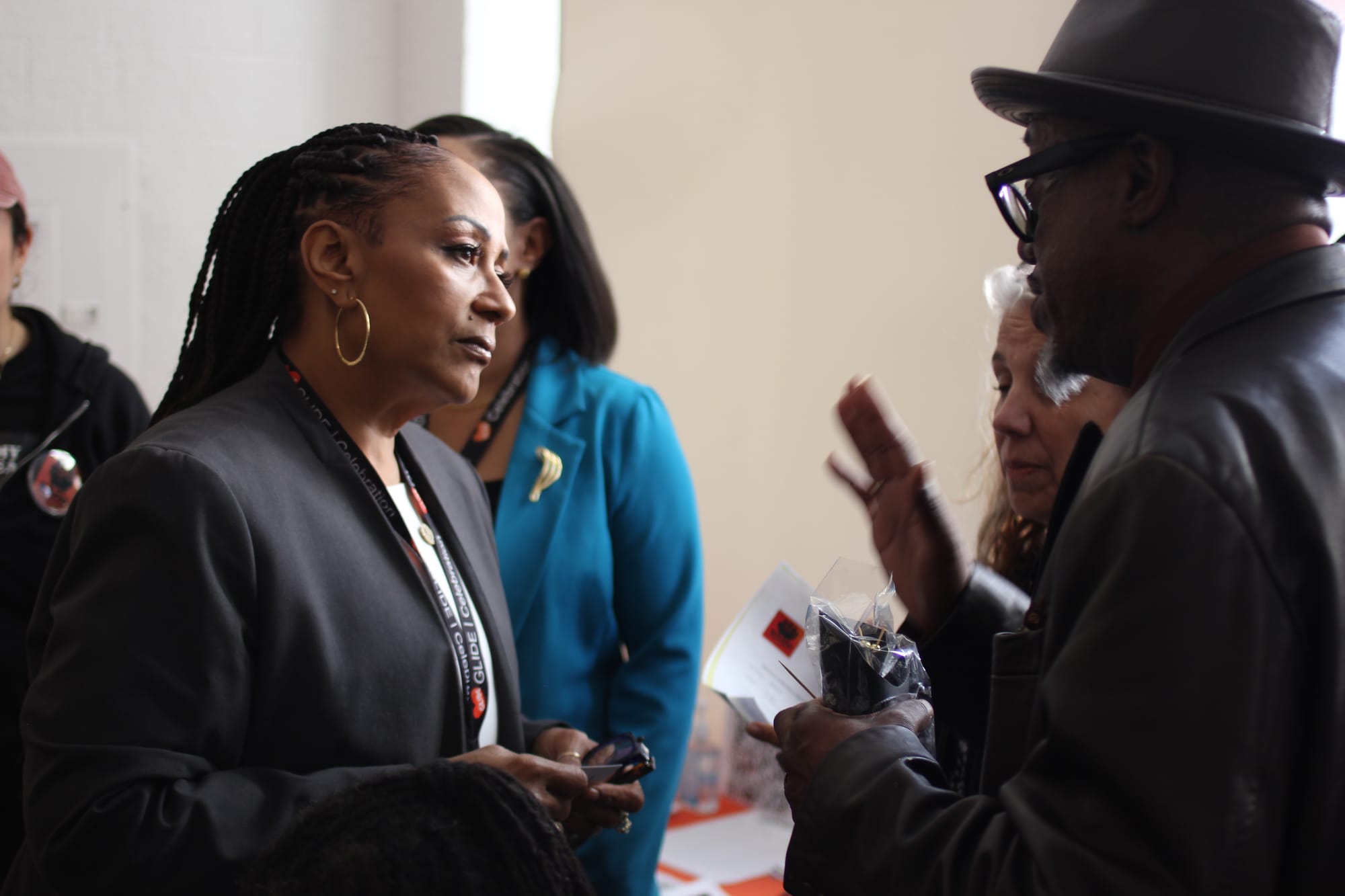
Since founding the organization, the brothers-in-law have moved at lightning speed. Before their first year was out, they applied for and were granted federal nonprofit status. They led the production of an original theatrical play with a plot inspired by TC’s death and the systems that failed him, and filled the Ruth Williams Bayview Opera House for two performances. They connected with community members and partner organizations at Recovery Day, an annual event celebrating recovery from addiction and offering attendees information and resources. They inked an agreement with the Department of Public Health to provide HIV, Hepatitis C, and other screenings, as well as information sessions.
And they worked with the staff of a state legislator to draft what they have dubbed Theris’ Law, a proposal to enable family members of someone incapacitated by drug use and mental illness to obtain a temporary, crisis-related conservatorship.
The proposed legislation is what Coats Sr. says would have allowed his family to save his son. Now that Theris’ Law is drafted, BADD is seeking a sponsor to shepherd it through the state Legislature.
BADD’s second year is shaping up to be no less ambitious. In addition to pushing for Theris’ Law, the pair also intends to bring the play back for a second round of shows. They have set a goal of distributing 800 recovery kits — small packages with hygiene essentials, fentanyl test strips, and the overdose reversal drug Narcan. They are launching Voices Unmuted, which will serve as a support group, mutual-education circle, and safe place for young men age 18 to 35. Its first sessions will be virtual, and are slated to begin this summer.
And BADD will offer direct help to families searching for loved ones languishing on the streets of San Francisco. Their soon-to-launch app, Lifeline SF, will allow a family member to submit the name and some photos of the person they’re concerned about. Coats, Beal, and their allies will look for the person and encourage them to get in touch with their family. Even without the app, BADD has already reconnected three people from other parts of the country with loved ones who were in active addiction on local streets. But most importantly, they are rolling up their sleeves to fundraise.
“They’ve been doing this work without the money,” Ellington said.
Funding is the biggest need among addiction-service providers right now, according to DeNay Ramsey. He is the president and CEO of Pathway Humanity, which runs both residential and outpatient recovery facilities in the East Bay.
“You could open 100 more facilities and it still wouldn’t be enough,” Ramsey said.
Government cutbacks are worsening an already dire situation, slashing support for not just African American but immigrant populations, Ramsey added.
“Oakland is a larger version of the Tenderloin,” he said. “The resources just aren’t there.”
Small grants and in-kind donations have helped Coats and Beal keep up the momentum.
“We’ve been scraping, scrimping, making ends meet so we can do some real work,” Coats said. Support from allies has buoyed him in his mission to help others avoid tragedy.
“It takes a whole community. Together, we can stop some of this from happening,” he said.
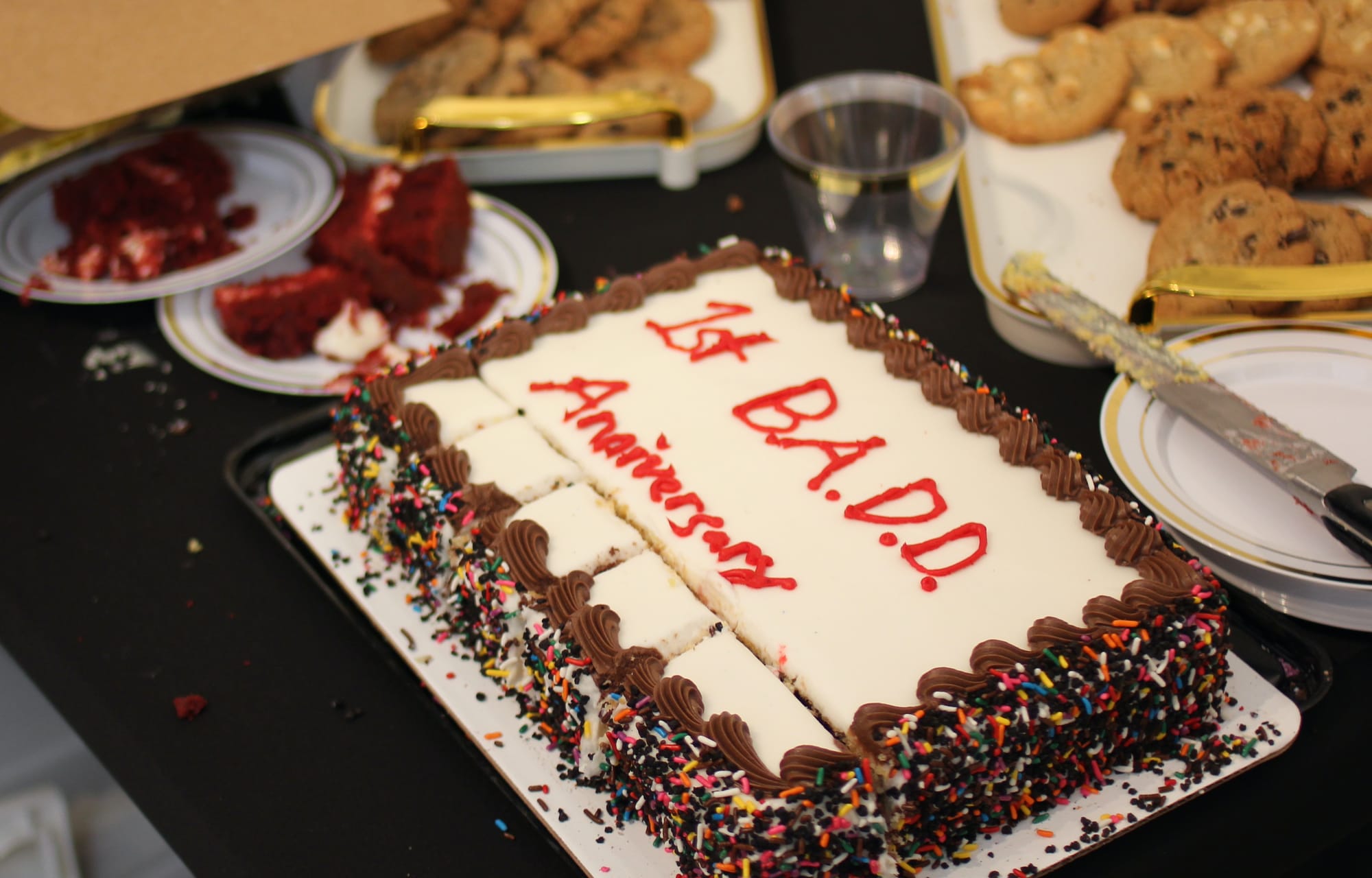
The Tenderloin Voice shares office space with Brothers Against Drug Deaths.

The city is conducting a needs assessment to help inform programming and budget decisions.

The popular program pays musicians to play for the public, including in the Tenderloin. Interested artists can apply until Oct. 1.

Issue 4 of the TL Voice print edition is being distributed now.

The business is a blend of cultures, just like the family behind it.
Stay tapped into the Tenderloin: Our email newsletter sends every article to your inbox. Unsubscribe anytime.